Benefits of Effective Fixed Asset Management
Effective Fixed Asset Management
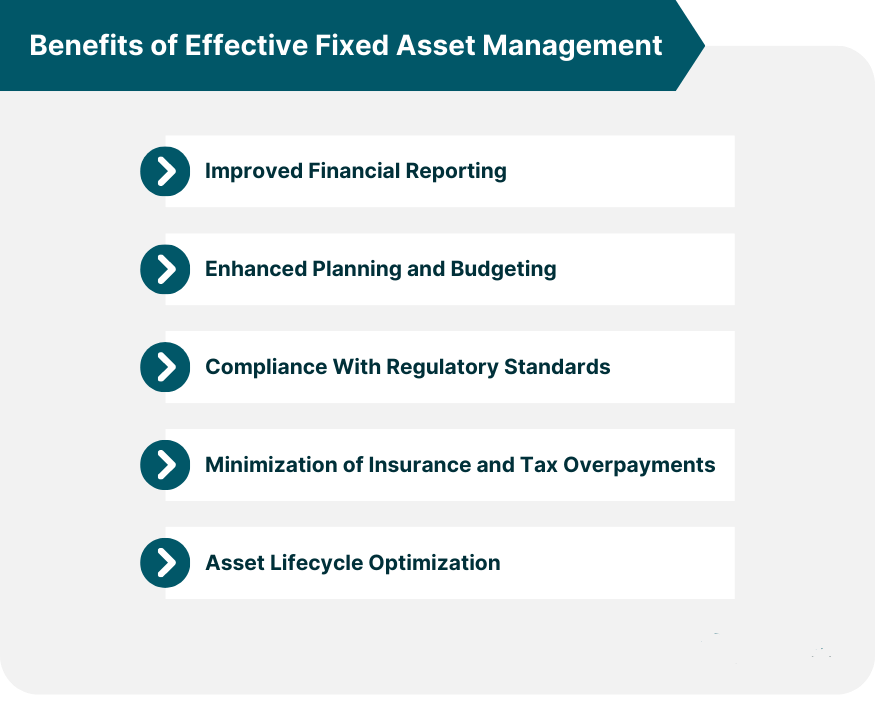
Improved Financial Reporting
Moreover, maintaining accurate records of fixed assets is crucial for businesses. Consequently, proper tracking and depreciation calculations offer a clearer financial snapshot, improving financial reporting quality. Moreover, this meticulous approach ensures investments are reflected accurately, aiding decisions and giving stakeholders a clearer view of financial health.
Enhanced Planning and Budgeting
Moreover, a clear grasp of fixed assets supports informed decisions by companies. Consequently, this knowledge assists in planning future investments, managing operational costs, and evaluating asset disposals. Consequently, a clear picture of fixed assets helps companies enhance planning and budgeting, leading to more strategic decision-making.
Compliance With Regulatory Standards
Adhering to regulations on fixed asset management is crucial for businesses. Moreover, by accurately tracking and reporting fixed assets, companies can avoid penalties and maintain compliance. Effective management not only reduces the risk of sanctions but also ensures transparency and accountability in financial operations.
minimisation of Insurance and Tax over-payments
Additionally, accurate tracking and valuation of assets are crucial for businesses. By reflecting the true, depreciated value, companies can save costs. As a result, insurance premiums and taxes are not overpaid, contributing to significant savings.
Asset life cycle optimisation
Moreover, effectively managing assets throughout their life cycle is crucial for businesses. It helps maximise the value of each asset and extend their operational life. Moreover, informed disposal or replacement decisions help companies optimise resources efficiently.
Improved Financial Reporting
Moreover, maintaining accurate records of fixed assets is crucial for businesses. Additionally, proper tracking and depreciation calculation provide a clearer financial snapshot and bolster reporting quality. However, this meticulous approach ensures investments are reflected accurately, aiding decision-making and improving stakeholders’ view of financial health.
Enhanced Planning and Budgeting – Effective Fixed Asset Management
Firstly, understanding fixed assets is crucial for companies to make informed decisions. This knowledge helps in planning future investments, managing operational costs, and evaluating potential asset disposals. Consequently, a clear picture of fixed assets helps companies enhance planning and budgeting for more strategic decisions.
Compliance With Regulatory Standards
Moreover, adhering to regulations on fixed asset management is crucial for businesses. By accurately tracking and reporting fixed assets, companies can avoid penalties and maintain compliance. Effective management not only reduces the risk of sanctions but also ensures transparency and accountability in financial operations.
Fixed Asset Management – minimisation of Insurance and Tax over-payments
Accurate tracking and valuation of assets are crucial for businesses. Consequently, by reflecting the true, depreciated value, companies can save costs. This ensures that insurance premiums and taxes are not overpaid, leading to significant savings.
Asset life cycle optimisation – Effective Fixed Asset Management
Effectively managing assets throughout their life cycle is crucial for businesses. Additionally, this helps maximise the value of each asset and extend their operational life. By making informed decisions on disposal or replacement, companies can optimize their resources efficiently.
Fixed Asset Management – Compliance With Regulatory Standards
Adhering to regulations on fixed asset management is crucial for businesses. By accurately tracking and reporting fixed assets, companies can avoid penalties and maintain compliance. Effective management not only reduces the risk of sanctions but also ensures transparency and accountability in financial operations.
minimisation of Insurance and Tax over-payments
Accurate tracking and valuation of assets are crucial for businesses. By reflecting the true, depreciated value, companies can save costs. This ensures that insurance premiums and taxes are not overpaid, leading to significant savings.
Asset life cycle optimisation – Effective Fixed Asset Management
Effectively managing assets throughout their life cycle is crucial for businesses. It helps maximise the value of each asset and extend their operational life. By making informed decisions on disposal or replacement, companies can optimize their resources efficiently.
Learn How DSK Global Solution Can Help
Fixed Assets Management Software
Fixed Assets Physical Verification Tagging
LinkedIn Page