Components of Fixed Asset Management
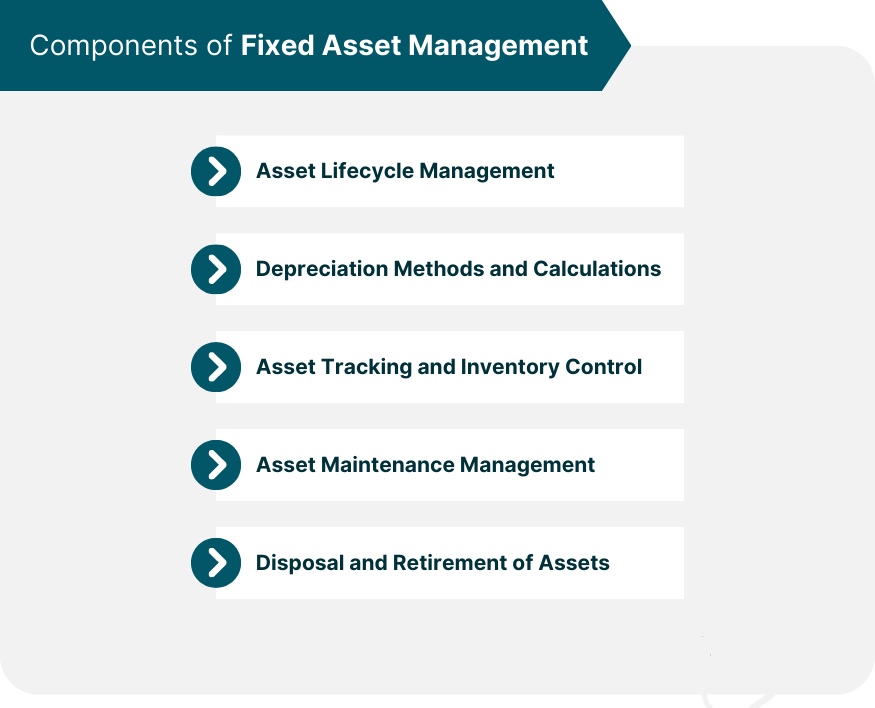
Firstly, effective fixed asset management involves key components that help organisations track, maintain, and optimise assets. Let’s take a closer look at these components:
#fixed asset management
Asset life cycle Management
This refers to managing an asset from acquisition to disposal. It involves understanding when to purchase an asset, how to use it most efficiently during its operational life and when and how to dispose of effectively. Moreover, managing the asset life cycle effectively can help businesses optimize costs and improve productivity.
Depreciation Methods and Calculations
Depreciation is the gradual decrease in the value of fixed assets over time due to wear and tear, obsolescence, or other factors. Consequently, understanding and calculating depreciation accurately is crucial for financial reporting and asset valuation on the balance sheet. Various methods can be used to calculate depreciation, such as straight-line, declining balance, and units of production. Consequently, proper management of depreciation helps companies reflect the true value of their assets and avoid financial discrepancies.
Asset Tracking and Inventory Control
Moreover, asset tracking is the process of monitoring and recording the location, condition, and status of fixed assets. This component involves using technology such as barcodes, RFID tags, or asset tracking software to accurately track the movement and utilisation of assets within an organisation.. Inventory control, on the other hand, ensures there is an accurate record of all assets held by a company. Additionally, accurate asset tracking and inventory control can help to prevent loss or misuse of assets.
Asset Maintenance Management
Additionally, regular maintenance and timely repairs are essential for keeping fixed assets in optimal condition and ensuring efficient performance. Additionally, implementing a preventive maintenance schedule can help extend the lifespan of assets and reduce the risk of unexpected breakdowns.
Disposal and Retirement of Assets
In this regard, at the end of an asset’s useful life, it should be disposed of correctly. For example, this might involve selling the asset, recycling parts, or even writing it off completely. Additionally, effective management of this process can help companies recover some of the initial costs and minimise environmental impact.
Compliance and Regulations
Moreover, ensuring adherence to regulatory requirements and accounting standards is crucial in fixed asset management. Additionally, organisations must follow guidelines set forth by governing bodies to maintain transparency and accuracy in their financial reporting. Failure to comply can lead to penalties, legal issues, and reputational damage. By staying up to date with regulations, organisations can demonstrate accountability and trustworthiness to stakeholders.
Asset life cycle Management
This refers to managing an asset from acquisition to disposal. It involves understanding when to purchase an asset, how to use it most efficiently during its operational life and when and how to dispose of effectively. Managing the asset life cycle effectively can help businesses optimize costs and improve productivity.
Depreciation Methods and Calculations – Components of Fixed Asset Management
Depreciation is the gradual decrease in the value of fixed assets over time due to wear and tear, obsolescence, or other factors. Understanding and accurately calculating depreciation is crucial for financial reporting purposes and determining the true value of assets on the balance sheet.. Various methods can be used to calculate depreciation, such as straight-line, declining balance, and units of production. Proper management of depreciation helps companies to reflect the true value of their assets and avoid financial discrepancies.
Fixed Asset Management – Asset Tracking and Inventory Control
Asset tracking is the process of monitoring and recording the location, condition, and status of fixed assets. This component involves using technology such as barcodes, RFID tags, or asset tracking software to accurately track the movement and utilisation of assets within an organisation.. Inventory control, on the other hand, ensures there is an accurate record of all assets held by a company. Accurate asset tracking and inventory control can help to prevent loss or misuse of assets.
Asset Maintenance Management – Components of Fixed Asset Management
Regular maintenance and timely repairs are essential to ensure that fixed assets remain in optimal condition and continue to perform efficiently. Implementing a preventive maintenance schedule can help extend the lifespan of assets and reduce the risk of unexpected breakdowns.
Fixed Asset Management – Disposal and Retirement of Assets
At the end of an asset’s useful life, it needs to be disposed of correctly. This might involve selling the asset, recycling parts, or even writing it off completely. Effective management of this process can help companies to recover some of the initial costs and minimise environmental impact.
Compliance and Regulations
Ensuring adherence to regulatory requirements and accounting standards is crucial in fixed asset management. organisations must follow guidelines set forth by governing bodies to maintain transparency and accuracy in their financial reporting. Failure to comply can lead to penalties, legal issues, and reputational damage. By staying up to date with regulations, organisations can demonstrate accountability and trustworthiness to stakeholders.
Learn How DSK Global Solution Can Help
Fixed Assets Management Software
Fixed Assets Physical Verification Tagging
LinkedIn Page